

Caley Fretz, Jonny Long, Iain Treloar, and Joe Lindsey contributed reporting to this article.
Escape Collective can reveal that multiple Tour de France teams are using the controversial and potentially dangerous practice of inhaling the deadly gas carbon monoxide to optimise their athletes’ altitude training.
At least three teams, including the Visma-Lease a Bike and UAE Team Emirates squads of top contenders Jonas Vingegaard and Tadej Pogačar, and Israel-Premier Tech have access to an expensive device called a carbon monoxide rebreather, which allows for the precise dosing of carbon monoxide into the lungs.
While a recent arrival to cycling, the technique itself is not new; it’s been known for decades and is used in medical and scientific research settings.
These types of devices have two potential uses within elite sport. The first is called carbon monoxide (CO) rebreathing, a measurement tool that helps teams quickly and accurately track key blood values and optimise the powerful physiological benefits of altitude training.
A second, more aggressive approach, which is called carbon monoxide inhalation and uses the same equipment and techniques, steps into the scientifically new and much riskier realm of inhaling the poisonous gas for the express purpose of performance enhancement. A growing body of recent scientific research suggests CO inhalation can have a powerful impact on measures of aerobic capacity like VO2max, or maximal oxygen uptake.
The technique is not banned by WADA, although it appears to conflict with the agency’s rules around artificial manipulation of the blood. And there is no hard evidence that any WorldTeams are currently using CO inhalation for performance gains. But multiple sources for this article voiced concern that it might be imminent, and possibly already happening in cycling or other sports.
Visma, UAE and IPT confirmed they have access to a rebreathing device and use the technique for measurement purposes. Mathieu Heijboer, head of performance for Visma, told Escape that “We have been working with Bent Rønnestad for a few years now to do measurement at the beginning and end of altitude camps.” Rønnestad is a professor at Inland Norway University and an expert on altitude physiology; Heijboer emphasised the testing takes place only when Rønnestad is present; he does not stay for the full camp.
“Israel-Premier Tech’s sole use of the Detalo Blood Volume Analyzer is for testing purposes to measure the impact of altitude training,” said a team spokesperson in an e-mailed reply to Escape‘s request for comment. In a brief statement provided to Escape, UAE’s medical director Adriano Rotunno confirmed that the team uses CO rebreathing for testing purposes. “It’s not a therapy; it’s a diagnostic tool that we use to essentially work out what our athletes’ physiology is,” he said, adding that there is no performance enhancement to the measurement method.
But there is strong evidence of benefit from the more aggressive CO inhalation use. Research into CO inhalation was recently presented at a sports science conference called Science & Cycling, held in Florence, Italy just before the Tour de France’s Grand Depart. The presentation, one of the conference’s keynote sessions, was attended by many top sports science researchers and experts including representatives from most Tour teams, according to sources who were present. Those sources indicated that the physiological principles underpinning the presentation were widely understood, but the practical applications are only beginning to emerge.
That research, plus other studies dating back years, strongly suggest that CO inhalation can itself provide similar effects to altitude training. By inducing hypoxia – a state of oxygen deprivation – CO inhalation can be used to prolong or even replace the performance-enhancing benefits of altitude training. It can also be used in conjunction with altitude training to maximise gains, as part of an approach called “super altitude.”
While CO rebreathing for measurement is not itself performance-enhancing and involves less exposure and therefore risk, it’s just a small step from there to CO inhalation for performance gains, according to Carsten Lundby, another physiology professor at Inland Norway University and CEO of Detalo, which manufactures the CO rebreathing machine used by several teams. Lundby also works with Israel-Premier Tech. The difference is basically a matter of frequency. Measurement is conducted infrequently, usually before and after an altitude camp, while inhalation for performance gains would require much more frequent doses, possibly multiple per day. As such, it carries additional risk.
“This strategy is so simple; it’s been out there for, I don’t know, maybe 20 years,” Lundby told Escape. But because the method involves inhaling a potentially deadly poison gas, “there was a general understanding among physiologists with an interest in the field that [enhancement] is not something one should be engaged in.” But the quickening pace of research around CO inhalation for performance gains raises the question of whether that informal truce will hold.
The World Anti-Doping Agency (WADA) did not respond to multiple requests for comment; the organisation’s code suggests that the use of CO inhalation is at best a grey area, but researchers Escape spoke with said they pre-cleared research studies on the technique with national anti-doping agencies, in particular when using elite athletes as subjects, and have been told it is not currently banned. However, the technique is highly similar to xenon gas inhalation, which WADA banned in 2014.
There is considerable disagreement within the WorldTour and the scientific community about the practice of CO inhalation in sports. While Rønnestad and colleagues like Daniele Cardinale – who gave the presentation at the Science & Cycling conference – press ahead with research, other scientists have pushed back forcefully.
Lundby, the Detalo CEO and Israel-Premier Tech consultant, recently co-wrote a letter to the Journal of Applied Physiology, where he labelled CO inhalation for direct, altitude-like performance gains an “utterly toxic approach.”
In the letter, which Lundby provided to Escape, he and his co-author wrote, “This practice is now allegedly used by some athletes and national sport federations. While the approach is not illegal, we are truly disturbed with this development.”
Some teams feel similarly. A representative from Uno-X Mobility told Escape that even the CO rebreathing protocol for measurement “is not something we are even considering.” An official with another WorldTeam told Escape he is opposed to the technique even for measurement purposes, saying, “You can’t measure something you can’t actually change, unless you decide to utilise more CO.” When asked about the potential use of CO inhalation for performance gains, he was unequivocal: “That would be blood doping – make no mistake.”
While teams are adamant that their use of CO rebreathing is legal and for measurement purposes only, the thin line between CO rebreathing and CO inhalation; the existence of research that shows compelling, direct performance benefits of the latter; and the proximity of that research to top cycling teams makes the subject one of concern to all cycling fans.
More than a year after the term “super altitude” first dropped onto our radar, some of its constituent parts are beginning to become clear.
Go high to get fast
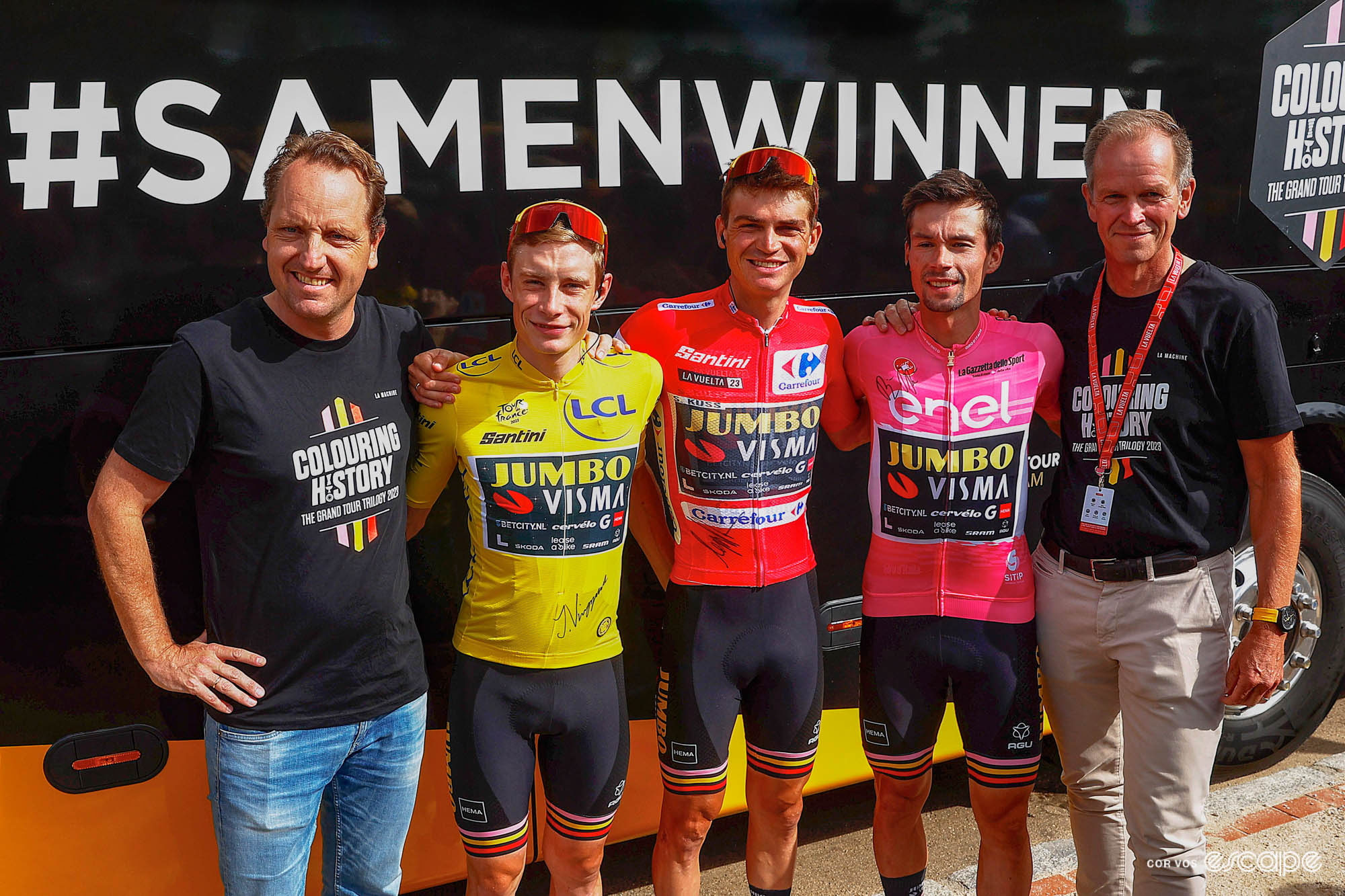
This story is based on extensive research and interviews with officials and sports scientists from a number of pro cycling teams, as well as researchers who have long studied the physiology of carbon monoxide rebreathing and inhalation, often working with those same pro teams. But it truly got its start almost exactly a year ago, with Jonas Vingegaard’s dominant performance in the stage 16 time trial at the 2023 Tour de France.
Pro cyclists and their teams are always seeking an advantage, and innovation is found on the edges. As we grappled with Vingegaard’s ride, we set about looking for explanations. Visma had clearly made distinct, smart, tangible gains to allow Vingegaard to soundly beat Tadej Pogačar in the time trial. Visma’s Heijboer detailed many of those gains in an episode of Escape’s Performance Process podcast, but not all of them.
While Heijboer was keen at the time to downplay the team’s altitude optimisation, time and again we heard about the role it played, and how the team’s increasingly sophisticated understanding of adaptations to altitude set the stage for its unprecedented 2023 Grand Tours sweep.
Altitude training is not new. The sporting community has long understood the benefits of altitude training for endurance performance as the body adapts to the lower oxygen levels it experiences in high-altitude environments. Specifically, going to high altitude stimulates the production of erythropoietin (EPO), a naturally occurring substance that increases red blood cell count and haemoglobin mass (the total amount of haemoglobin in the body), thereby enhancing oxygen transport. And for endurance sports in particular, there is no more powerful way to improve performance than increasing the amount of oxygen blood can carry to muscle tissue.
In the 1990s, that link became perverted with the rise of synthetic, or recombinant EPO and other substances that changed blood chemistry to supercharge aerobic engines. But as cycling cleaned up in the 2010s – with more and better anti-doping testing; the introduction of WADA’s Athlete Biological Passport, which tracks changes in blood chemistry to flag sudden or suspicious shifts; and cultural changes within the sport – teams sought ways to create similar performance enhancements through legal means. Altitude camps became the chief way to achieve those goals, to the point where the majority of riders in the Tour de France, and all of the contenders for the leader’s yellow jersey, now utilise altitude training as a foundational training tool.
But it comes with drawbacks and challenges. Athletes must first acclimatise to the lower oxygen levels, which can initially reduce performance and may even result in acute complications like altitude sickness. During camps, training intensity and workloads can be affected as athletes experience increased fatigue, longer recovery times, and issues like disrupted sleep.
Finally, while altitude training is widespread in the WorldTour today, both scientific research and anecdotal evidence strongly suggest a wide range of personal variability in outcomes.. “Some athletes that we have don’t respond at all to altitude,” said UAE’s Rotunno. “We know this because we have that data.”
That’s where the CO rebreathing protocol used for measurement comes in.
The key to ‘super altitude?’
In summer 2023, we first heard about the concept of “super altitude” specifically in relation to techniques being used by Visma-Lease a Bike. The precise definition of the term was unclear, but conversations with various individuals involved in high-performance sports science all pointed in a similar direction: altitude training had become commonplace to the point where there were few gains to be had over competitors. If everyone is at altitude, nobody is at altitude. So teams sought legal advantages within altitude training itself: ways of making it more effective or making its effects last longer. The rumour was that such techniques had been found and were being used, but details were sparse.
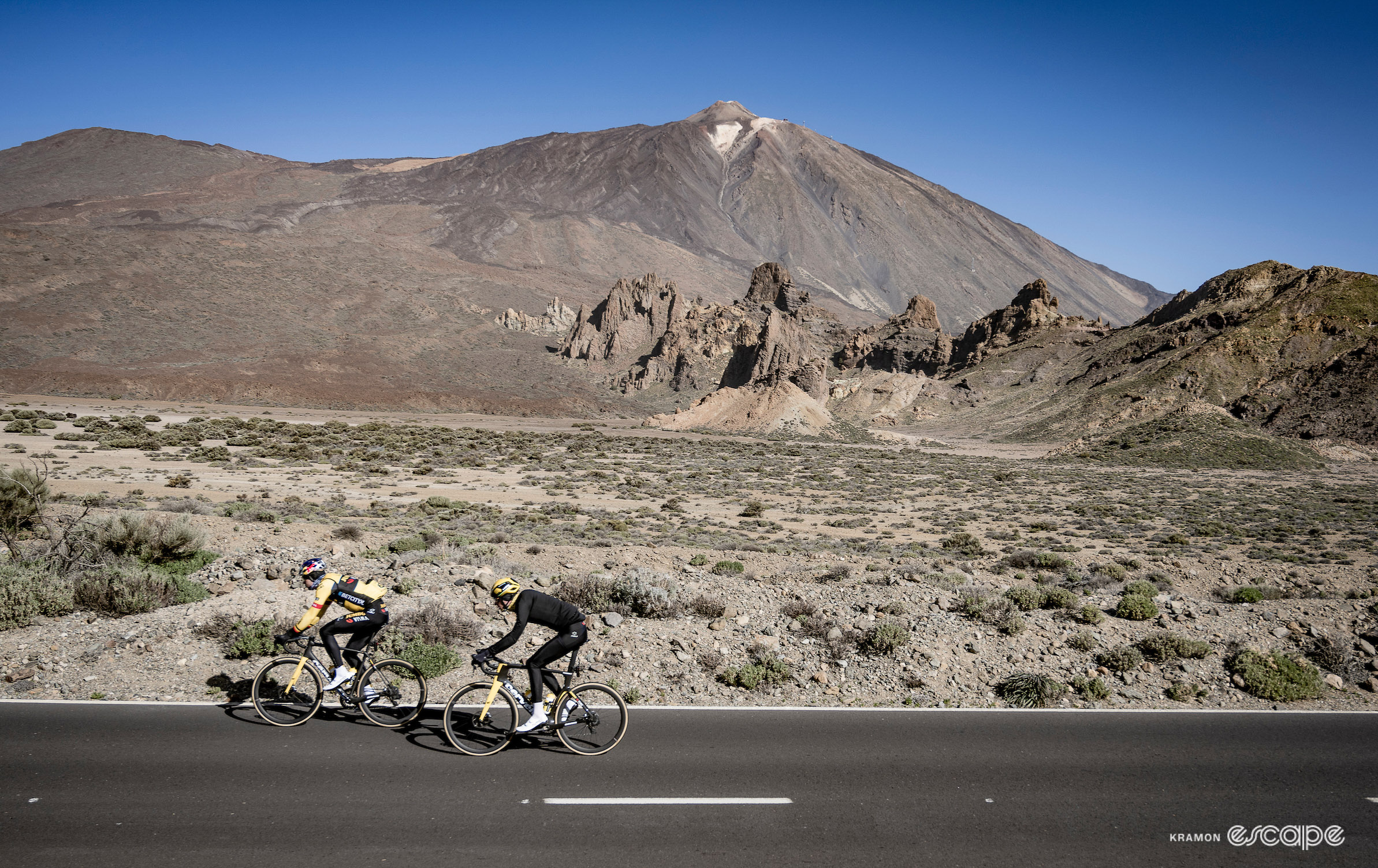
Super altitude involves a variety of approaches, for example sleeping in high-altitude tents when already living at elevation to simulate even loftier heights. Other new altitude interventions also include varying the high-altitude locations within a single training block, with athletes completing an initial period of training at one relatively high location before then moving to an even higher one for the final phase of the training block. In 2023, Heijboer told Escape that Wout van Aert used just such an approach, spending three weeks at 2,200 meters in the Sierra Nevada before moving to a 3,000-meter-high location in Switzerland for the final week before the Tour de Suisse.
Additionally, teams are now incorporating and doubling up other training interventions, such as heat training, with altitude training. An increasingly popular technique of late, heat training involves exercising in hot conditions, usually on an indoor trainer in a heated room.

Traditionally, heat training was used to acclimatise to hot race days, but more recently it’s been used for its ability to increase blood plasma volume, which improves cardiovascular function and thermoregulation. It’s doubly potent however: the increased plasma volume enhances cardiovascular efficiency by optimising blood flow and oxygen delivery to muscles, thereby boosting overall endurance.
The challenge with combining both methods is that they are extremely stressful for the body. At least initially, pairing heat and altitude training pulls blood plasma volume in different directions, muting the benefits. And even after that stabilises and red blood cell production increases along with plasma volume, there are increased risks for complications like dehydration, electrolyte imbalance, and worsening recovery.
In one presentation at a Science & Cycling symposium last spring, Irina Zelenkova, an MD at the University of Zaragoza in Spain and the altitude advisor to Alpecin-Deceuninck and UAE Team Emirates, detailed how CO rebreathing tests had revealed two athletes with identical altitude camp durations and training loads experienced an eightfold difference in their physiological response, as measured by a key parameter called total haemoglobin mass. (An Alpecin spokesman confirmed the team works with Zelenkova but denied that it uses carbon monoxide, even for rider testing. Zelenkova did not respond to an emailed request for comment.)
Traditional blood tests of markers like haemoglobin concentration or haematocrit – red blood cells as a percentage of total blood volume – correlate only loosely to exercise performance outputs. But because each gram of haemoglobin in the body can carry 1.39mL of oxygen, aerobic capacity changes directly in proportion to shifts in total haemoglobin mass (Hbmass). As the formula goes, each extra gram of haemoglobin is good for a roughly 4mL/min increase in VO2max. And for two decades, carbon monoxide inhalation has been a fast, accurate way to test it, including in medical settings.
The test is relatively simple: the person breathes in a controlled mixture of oxygen and carbon monoxide for a period of time and a small amount of blood is drawn pre- and post-session for testing. Carbon monoxide bonds almost completely to haemoglobin in the blood, far more efficiently than oxygen does, to form a stable complex called carboxyhaemoglobin, which can be measured in a blood gas analyser. If you know the original CO dose size, analysing the amount of carboxyhaemoglobin before and after the rebreathing session lets you calculate the total Hbmass. At an altitude camp, according to Heijboer and Rønnestad, testing for measurement would be infrequent: once pre-camp and then after.
As teams increase their understanding of optimal altitude protocols, partly due to CO rebreathing to measure Hbmass, they can now prescribe precise altitude training regimens, including specific elevations and time at those elevations. The goal is now to layer the most effective (and ostensibly legal) means of increasing performance on top of each other.
But measuring those gains accurately requires expensive, specialised equipment and expertise. The Detalo Performance rebreathing machine, from Lundby’s company, costs around €50,000; both Visma and Israel-Premier Tech use it, Lundby and officials from both teams confirmed. Neither technically own their machines; Visma’s is owned by Inland Norway University, where Rønnestad and Lundby work (Lundby consults with Israel-Premier Tech, but not with Visma), while a representative from Israel-Premier Tech said the machine that team uses is owned by Tel Aviv University’s Sylvan Adams Sports Institute (Adams is the owner of the IPT team). In both cases, Lundby and Rønnestad respectively said, the teams use the machine for measurement purposes only, to fine-tune altitude training.
In addition, Visma’s Heijboer said, they only use the Detalo Performance under Rønnestad’s direct, in-person supervision. Similarly, the IPT spokesperson said that testing involves all riders present at a given altitude camp, but is administered directly by Lundby, and takes place twice: prior to the camp and then post-camp. According to Rotunno, UAE’s testing can take place as often as three times: at the start of a camp, in the middle, and at the end. Although he did not detail who oversees the testing, he said that “because obviously there’s a side effect that can be quite dangerous” the testing uses only controlled, safe amounts of carbon monoxide, in a laboratory setting. “Once we have that information, we can then work out how we prescribe training regimens for that athlete, and whether or not that athlete benefits from high altitude training or not,” he said.
Less expensive setups are available, but require cobbling together all the necessary components of the apparatus from various sources, which we won’t list here. That’s to say nothing of acquiring the gas, ideally 99.999% pure medical-research grade, and the expertise needed to calculate and administer the precise dose and run the blood tests. As such, although it is only for data-collection purposes rather than direct performance gains, even the CO rebreathing protocol offers an advantage to well-funded teams with the resources to explore experimental techniques and employ sophisticated sports science staff and advisors to implement the results, leaving less-wealthy teams behind.
The next frontier
CO rebreathing for measurement, however, is only one side of the carbon monoxide coin; CO inhalation can also be used to create the very improvements it is tracking. As far back as the 1970s, researchers noted that blood tests on cigarette smokers showed elevated values of haemoglobin and haematocrit, and theorised that it was the hypoxia created by the habit that spurred the body’s response. Indeed, an old joke in cycling’s academic circles is that carbon monoxide may be the real reason why motorpacing is so effective – because the athlete is breathing in carbon monoxide off the exhaust all day.
In the 1980s, researchers investigated the effects of exposing rats to larger doses of carbon monoxide than would be used for CO rebreathing and found it increased both haematocrit and blood plasma. But outside of the interest of research scientists in refining and improving the CO inhalation test method, the gains were mostly unstudied, hiding in plain sight but untouched perhaps thanks to the truce Lundby mentioned.
But roughly five years ago, that began to change. A 2019 study titled ‘A New Method to Improve Running Economy and Maximal Aerobic Power in Athletes’ looked at periodic CO inhalation in 12 football players and saw significant gains in key markers also commonly associated with cycling performance.
A study published in Medicine & Science in Sports & Exercise in 2020 by Walter Schmidt, another researcher with deep background in the field and co-founder of a company that, like Detalo makes CO rebreathing equipment, found a 4.8% increase in Hbmass and a 2.8% bump in VO2max, or maximal oxygen uptake, after three weeks of CO inhalation multiple times daily. That’s even as other studies on the effect of altitude training alone on VO2max have shown positive but variable responses, suggesting CO inhalation may be more potent.
And in 2022, a master’s thesis from Christoffer Sundqvist, a graduate student working under Cardinale, measured the effect of CO inhalation on power output and fatigue in maximal sprints in a small group of endurance athletes, compared to a control group. After three weeks of treatment, the test group was able to sustain the same level of power output with less fatigue even as the control group dropped off.
Cardinale himself is responsible for an upcoming trio of studies – one of them co-authored with Rønnestad – that further investigates the benefits of CO inhalation, some of which were discussed at the Cycling & Science conference. According to one attendee who took detailed notes, Cardinale presented data from one study, on CO inhalation at altitude, that had riders inhale CO twice per afternoon for a sustained period and demonstrated a 5.8% increase in Hbmass.
Those benefits, Lundby maintains, are at least equal to what would be achievable with altitude training alone. Asked how the method might compare to blood doping, he responded that while it’s not possible to directly compare the methods, “if you increase the Hbmass in a similar manner, the effect on VO2max will be identical.” In other words: it all depends on how much you inhale. Lundby says it would be technically possible but difficult to use the Detalo machine for enhancement, and added that he maintains remote access to every machine, including those used by Visma and IPT, which allows him to monitor for abuse.
Carbon monoxide inhalation can also be used to extend the duration of benefits even after athletes come back to normal altitudes, according to Lundby, who theorised that a daily post-stage inhalation session could offer a Tour contender a delay in the decline of altitude gains that athletes typically experience just weeks after an altitude camp.
All of that suggests that CO inhalation can induce significant changes in blood chemistry that are well-correlated to improvements in athletic performance. What is less clear at the moment, according to one expert in the field, is the actual change in athlete output – in other words, how many watts a cyclist stands to gain. Other details like optimal dosage are still very much in question as well. But while the science is not yet settled, cycling is at the forefront of efforts to understand the practice.
Cardinale’s presentation drew significant attention and “was the main topic of conversation at dinner that night,” said the source who attended the talk. But the general reaction wasn’t one of shock or moral quandary but rather academic interest – an unsurprising response for a group of people tasked with scientific advancement and experimentation, rather than the sporting ethics of their discoveries.
Cardinale has approached numerous WorldTeams about the topic and said at least three are already conducting the CO rebreathing test method, confirming our reporting. But even teams exploring that use are wary of going further. Visma’s Heijboer stressed that the team was only using the test for measurement and does not even have access to the machine independently, nor are staff trained in using it.
“That’s why we are only doing this with Bent, who is a very experienced guy, and he’s assisted by Joar Hansen, another scientist, so there are always two people doing these measurements,” Heijboer said. “I think we take a lot of safety measures to make sure that there’s nothing dangerous happening.”
Heijboer added that, while Visma is aware of the significant potential performance gains of CO inhalation, the team never considered using it for that purpose. “The safety concern and ethical concern of inhaling a lethal gas to improve or increase Hbmass doesn’t feel right for us. It’s not right ethically,” he said. “We deliberately chose not to do that.”
But when asked if he was concerned that other teams might not share that view, Heijboer admitted he was. “It’s pretty clear papers with pretty clear results,” he said. “So definitely, [it’s] not only teams, but also just endurance athletes who, for sure, are interested in this.”
‘If you get toxic levels, you’re really screwed’
The concern that CO inhalation could be in use now or imminently is understandable because of the technique’s clear potential for significant performance gains. Carbon monoxide inhalation for performance enhancement is similar in method and effect to the specifically banned practice of inhaling xenon gas. And while xenon is banned as a substance, WADA’s prohibited list contains an entire section on prohibited methods for manipulation of blood and blood components that explicitly rules out “artificially enhancing the uptake, transport or delivery of oxygen” except for supplemental oxygen by inhalation. Carbon monoxide inhalation might plausibly be considered manipulation, thanks to its effect on Hbmass.
But there are also serious safety concerns to using higher doses of CO. Along with the potential for enhancing performance, one of the criteria WADA weighs when considering whether to ban a substance or method is whether “it represents an actual or potential health risk to the athlete.”
The danger of CO inhalation comes from the same physiological processes that make it so effective. Because carbon monoxide binds more efficiently to haemoglobin than oxygen does, it reduces the blood’s ability to carry oxygen the body needs. Aside from the risk of death, acute carbon monoxide poisoning can cause lasting health problems, including delayed neurological damage.
In the less-frequent doses used for measurement in the CO rebreathing protocol, and when administered by trained experts, there is considerably less chance of harm. But when used for performance enhancement, the risks increase. In Schmidt’s 2020 study, the subjects inhaled carbon monoxide five times a day, which increased their carboxyhaemoglobin levels as high as 10% – roughly the level the United States Centers for Disease Control (CDC) says could cause unpleasant symptoms like a headache.
That’s what happened in January 2023 when two riders on Uno-X Mobility had to be taken to hospital after a go-karting session for team bonding left them with carbon monoxide poisoning. One, Anders Halland Johannesen, was so ill he vomited. It takes larger exposures to cause worse effects but, as the CDC notes, individual responses vary. (The Schmidt study does not discuss any side effects in subjects.)
And, as Lundby pointed out, the hypoxia that results from CO inhalation is far different than that produced by, say, an altitude tent, which reduces oxygen levels to simulate higher elevations. If an athlete exited an altitude tent, said Lundby, “in one breath you’re back to sea level, so to speak. But if you inhale carbon monoxide, the half-life is 300 minutes. If you get toxic levels, you’re really screwed” because the gas can’t leave your body for hours. While it would take a big mistake or a recklessly aggressive approach to get a toxic dose, it’s not impossible, he thinks. “It’s easy to imagine for a young cyclist [to think] if 100 millilitres is good, one litre is better, but it just isn’t,” he said. And in especially acute cases, victims would need access to a hospital equipped with a special hyperbaric chamber for treatment.
Schmidt’s 2020 study ends its discussion section by noting that it’s not currently possible to set a safe upper limit for exposure and adds a chilling warning: “like in the early days of erythropoietin abuse, when a series of deaths occurred, athletes could use very high doses of CO, which could result in serious health problems or death.”
There is, again, no hard evidence that WorldTeams are using CO inhalation for performance enhancement. But their exploration of the technique alone makes it more likely that someone else will cross that line, and both scientists and team officials Escape spoke with voiced concern about the potential for abuse. Several other sources claimed the technique was already in use in various sports. One sports scientist confirmed he had seen an athlete – in a sport he would not name – inhaling carbon monoxide for performance gains and conveyed his concern the practice could prove a blight on the Paris Olympics.
For their part, researchers investigating the CO inhalation enhancement technique claimed largely benevolent motivations. Cardinale explained to Escape that he wanted to offer an environmentally friendly alternative to altitude training, pointing to the sheer number of flights countless WorldTour athletes and staff take back and forth to altitude locations throughout the year. He also said he thinks there should be a debate about whether carbon monoxide really is ethically more questionable than ketones or even caffeine, because they’re foreign substances not produced in the body. “We legalized that one, and we say it’s fine. It’s culturally accepted, even though we know that these are one of the biggest ergogenic drugs that improve performance,” he said. (Neither is banned by WADA, although there is controversy around ketones and caffeine was once prohibited and has long been in the Monitoring Program).
But sometimes their views can veer close to the naïve. Both Cardinale and Rønnestad expressed surprise at the suggestion the inhalation method was already in use within the peloton and other Olympic sports, for instance. And Schmidt’s 2020 study on inhalation as enhancement warned that the study “may have opened a Pandora’s box” but rationalised its value because it might enable scientists “to better control or regulate the handling of CO that is probably already in place.”
Lundby and others are convinced CO inhalation is already being used. As he described it to Escape, the difference between rebreathing for measurement purposes and inhalation for performance gains is “a small step from measuring to doing the same thing, but not measuring.”
That CO inhalation is not illegal raises the question why that is so. Escape Collective sent multiple requests for comment to both WADA and the UCI on whether each was aware of the technique and new research into it, and what each body planned to do in response. WADA – which has funded several altitude physiology research papers that used CO rebreathing as a measurement tool – never responded, but Rønnestad said he approached Antidoping Norge to pre-clear his study on CO inhalation, as it was conducted on elite athletes. A spokesman for Antidoping Norge confirmed to Escape that it had told Rønnestad the method was not banned, but cautioned that its advice did not evaluate the study on ethical grounds.
The UCI replied to Escape’s request with a largely boilerplate statement that said WADA is responsible for establishing the Prohibited List, even though the sport’s governing body has recently moved to ban drugs like Tramadol before WADA acted. The statement did not address CO rebreathing or inhalation directly at all, saying only that “the UCI continues to collaborate with WADA and the International Testing Agency to ensure our regulatory approaches are synchronised, prioritising the integrity of competitions whilst ensuring the safety of athletes.”
A major complicating factor for regulators is that testing for carbon monoxide – an environmental gas we are all exposed to – would be tricky; if thresholds were set, athletes could claim contamination from air pollution or even just say they had smoked a cigarette. As for tracking changes in blood chemistry, currently Hbmass is not part of the Athlete Biological Passport’s haematological module, and other factors influence it. In a particular irony, the best test for tracking changes in Hbmass might be CO rebreathing itself.
But if WADA and the UCI don’t act, it will be up to sports to essentially police themselves. Lundby, whose long list of scientific publications includes anti-doping research, isn’t optimistic about the prospects of that. “In my mind, it needs to stem from a general ethical understanding that this is not something we should do,” he said. “Of course, elite sport doesn’t really work like that.”
What did you think of this story?